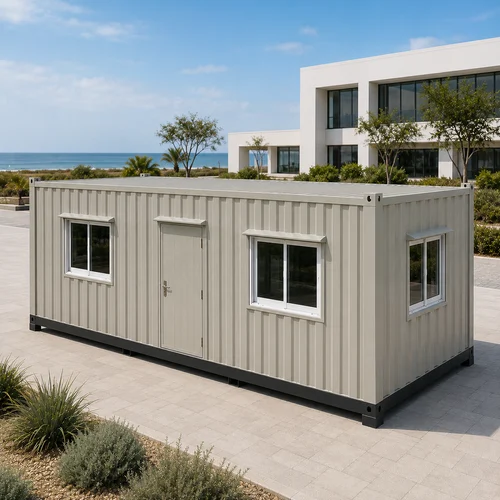
Container Office Cabin
Businesses across construction, manufacturing, logistics, and commercial industries often need flexible and practical workspace solutions. Building a permanent office may not always be suitable for temporary projects, expanding operations, or locations where space is limited. A container office cabin offers an alternative by providing a dedicated workspace that can be configured according to business requirements.
Choosing the right cabin involves considering its size, construction quality, interior layout, insulation, budget, and intended use. With different designs and specifications available, understanding these factors can help businesses make an informed decision. Epper Porta offers portable cabin solutions for businesses exploring practical office spaces for construction sites, industrial facilities, and commercial applications.
What Is a Container Office Cabin?
A Container Office Cabin is a prefabricated or modular workspace designed for office and administrative activities. Depending on its design, it can include doors, windows, electrical fittings, lighting, ventilation, insulation, and interior partitions.
These cabins are commonly used by construction companies, project managers, factory operators, warehouse businesses, and contractors. They can provide space for meetings, documentation, employee workstations, and daily administrative operations.
One of the main advantages of a container office cabin is its flexibility. Certain designs can be transported and installed at different locations, subject to their structural specifications and site conditions. Businesses can also explore customised layouts to accommodate their operational needs.
Factors to Consider When Choosing a Container Office Cabin
1. Identify Your Business Requirements
Before selecting a cabin, determine how it will be used. A small construction project may need a basic office for a supervisor, while a large industrial facility may require a workspace for several employees.
Consider whether the cabin will be used for project management, administrative work, meetings, staff coordination, or other activities. The intended use will influence the required dimensions, interior layout, electrical provisions, and additional facilities.
Clearly identifying your requirements will help you shortlist suitable options and avoid paying for features you do not need.
2. Choose the Right Size and Layout
The size of a container office cabin should match the number of occupants and the activities carried out inside it. A compact unit may be sufficient for a small team, while a larger cabin may be more suitable for multiple workstations or meeting areas.
When evaluating dimensions, consider the space needed for desks, chairs, storage cabinets, computers, and movement between work areas.
You should also think about the available installation space. Check site access, ground conditions, delivery vehicle access, and any restrictions that could affect positioning.
Epper Porta can be approached to discuss the required cabin dimensions and layout options for your business application.
3. Check Construction Quality and Materials
Construction quality is essential for a cabin intended for regular use. Before making a purchase, review the structural framework, wall panels, flooring, roof construction, doors, and windows.
The materials should be appropriate for the expected operating environment and duration of use. If the cabin will remain outdoors, ask about corrosion protection, waterproofing, roof sealing, and resistance to local weather conditions.
It is also helpful to request product specifications and photographs of previous installations. These details can provide a clearer understanding of the proposed cabin's construction and finish.
4. Consider Insulation and Ventilation
Indoor comfort is important when employees spend several hours working inside a container office cabin. Insulation can help reduce heat transfer, while suitable ventilation supports air circulation.
The right specification depends on the local climate, occupancy, cabin design, and whether air-conditioning or other temperature-control equipment will be installed.
For locations with high summer temperatures or significant seasonal changes, discuss insulation materials, ventilation arrangements, and roofing specifications with the supplier before finalising the design.
5. Review Electrical and Interior Facilities
A functional office requires more than an enclosed structure. Depending on the intended application, you may need lighting, electrical outlets, wiring, fans, air-conditioning provisions, and suitable work surfaces.
Additional options may include internal partitions, storage areas, extra windows, meeting spaces, and washroom facilities where feasible.
Prepare a list of essential and optional features before requesting a quotation. This helps suppliers understand your expectations and makes it easier to compare different cabin configurations.
Understand the Cost of a Container Office Cabin
The price of a container office cabin varies according to several factors, including dimensions, construction materials, insulation, interior fittings, design complexity, and customisation.
Transportation, site preparation, lifting equipment, and installation can also affect the total project cost. Therefore, it is important to compare the complete quotation rather than focusing only on the initial cabin price.
Before placing an order, ask the supplier to clarify:
- Cabin dimensions and construction specifications.
- Included electrical fittings and interior facilities.
- Additional charges for customisation.
- Transportation and installation costs.
- Expected manufacturing and delivery timelines.
- Applicable warranty coverage and payment terms.
A detailed quotation helps you understand what is included and reduces the possibility of unexpected expenses during the project.
Evaluate Portability and Installation Requirements
If your business operates across multiple locations, portability may be an important consideration. Some container office cabins are designed to be relocated when a project ends or operational requirements change.
However, relocation depends on the cabin's structural design, lifting points, transportation arrangements, site access, and reinstallation requirements. Not every cabin is equally suitable for frequent movement.
Before purchasing, explain your expected usage pattern to the supplier. If relocation is likely, confirm that the selected design supports the intended transportation and installation process.
You should also check the site foundation or base requirements, ground stability, drainage, utility connections, and any applicable local permissions.
Compare Suppliers Before Making a Decision
Selecting a suitable supplier is as important as choosing the cabin itself. A supplier should be able to explain available specifications, customisation options, delivery arrangements, and after-sales support clearly.
Compare the following factors when evaluating different suppliers:
- Product specifications: Check the materials, dimensions, and included features.
- Customisation capabilities: Confirm whether the cabin can be configured for your requirements.
- Project experience: Review relevant installations, photographs, and customer feedback where available.
- Pricing transparency: Request a written quotation with clearly defined inclusions.
- Delivery commitments: Confirm manufacturing schedules, transportation, and installation responsibilities.
- Warranty and support: Understand the coverage and process for addressing defects or other concerns.
Taking time to compare these details helps businesses choose a solution based on suitability and overall value rather than price alone.
Why Consider Epper Porta for a Container Office Cabin?
Epper Porta is a brand to consider when exploring portable cabin solutions for commercial, industrial, and construction applications. Businesses looking for a container office cabin can discuss their preferred dimensions, intended use, interior requirements, and installation location to identify an appropriate configuration.
Whether you need a workspace for a construction project, a factory, a warehouse, or a temporary business operation, defining your requirements in advance can make the selection process more straightforward.
Before confirming your order with Epper Porta, request the relevant product specifications, available customisation options, delivery schedule, installation details, and warranty terms. This will help you evaluate whether the proposed solution matches your business needs.
Conclusion
Choosing the best container office cabin for your business requires careful consideration of size, construction quality, interior layout, insulation, facilities, cost, and installation requirements. A suitable design can provide a functional workspace for construction projects, industrial operations, warehouses, and other commercial activities.
By comparing specifications and confirming all costs and delivery details, businesses can make a more informed purchasing decision. If you are exploring portable workspace options, consider discussing your requirements with Epper Porta to understand which container office cabin configuration may be appropriate for your project.
Frequently Asked Questions
1. What is a container office cabin used for?
A container office cabin provides workspace for administrative staff, project managers, engineers, contractors, and other employees at construction sites, factories, warehouses, and commercial locations.
2. How do I choose the right size of container office cabin?
Consider the number of occupants, required workstations, storage needs, furniture layout, and available installation space before selecting the cabin dimensions.
3. What factors affect container office cabin prices?
Prices depend on the cabin size, construction materials, insulation, interior fittings, customisation, transportation, site preparation, and installation requirements.